
Current offers
A little something for the East Valley.
$99 after-summer AC check
Arizona summers are hard on an air conditioner. Our $99 check covers monsoon dust on the outdoor coil, the condensate drain line and the capacitors that tend to fail first. Small problems get caught now, not next June.
Hometown Heroes save 20%
Active military, veterans, first responders and teachers get 20% off service calls and 5% off new equipment. Bring a military ID (CAC), DD-214, VA benefit card, or a work or school district ID. Can’t be combined with the Comfort Club.
Comfort Club, $19.99 a month
Two visits a year per system, 10% off service, 5% off new equipment, priority scheduling and no diagnostic fee.
Offers apply to residential customers in Keenan’s service area. One discount per visit. Pricing confirmed before any work starts.
Signs your heater needs repair
What matters in your home?
Start with what you’ve noticed.
The furnace blows cold air
The blower runs, but the air never warms. A dirty flame sensor, a failed igniter or a tripped safety switch are common causes. Check that the fan is set to Auto.
The heat pump air feels lukewarm
Heat pump air often feels cooler than furnace air, even when it’s working fine. If the house isn’t warming, the reversing valve, defrost controls or refrigerant charge may need a look.
It won’t turn on or keeps shutting off
It won’t start, or quits after a few minutes. A pressure switch, limit switch, thermostat or clogged filter can cause it. Often a safety control is doing its job.
A burning smell that doesn’t go away
A brief dusty smell the first time you run the heat is normal. A smell that lingers or seems electrical isn’t. Turn the system off and call.
"Aux heat" running all the time
Auxiliary heat is a heat pump’s electric backup. It should help on cold mornings, not run constantly. If it never shuts off, the heat pump may not be doing its share.
Some rooms stay cold
One room never warms while the rest is fine. Airflow is the usual suspect: a dirty filter, blocked vents or attic duct problems.
Heating safety: when to call right away
Safety first.
- If you smell gas, leave the house first and tell everyone else to get out. Don’t switch lights, appliances or the thermostat on or off. From outside, call 911, then your gas company. Southwest Gas: 877-860-6020. City of Mesa Gas (much of Mesa, Queen Creek and San Tan Valley): 480-644-4277. Not sure which you have? Your gas bill shows which company serves your home. Southwest Gas takes leak calls whether you’re a customer or not.
- If a carbon monoxide alarm sounds, get everyone outside into fresh air and call 911.
- If you notice a burning smell that won’t go away, or a breaker that keeps tripping, turn the system off at the thermostat and call Keenan.
Homes with gas appliances should have working carbon monoxide alarms. The U.S. Consumer Product Safety Commission recommends them on every level of the home and outside sleeping areas.
Furnace repair: what we check
Not warming up.
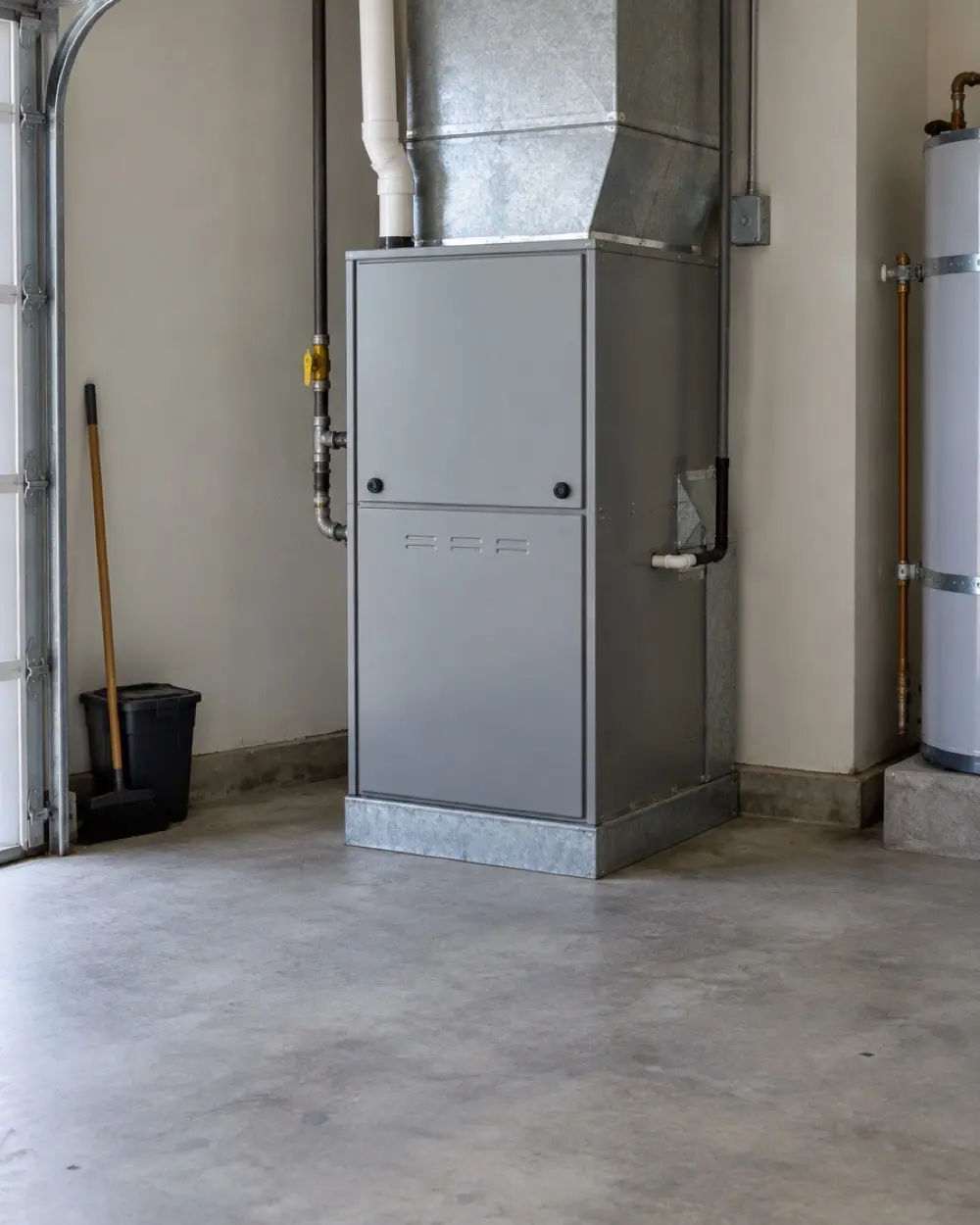
A gas furnace starts in the same sequence every time. The technician’s job is to find where it stops.
The thermostat calls for heat. The inducer motor clears the exhaust path, and a pressure switch confirms it. The igniter heats up, the gas valve opens and the burners light. A flame sensor confirms there’s a flame. Then the blower moves warm air through the house, while a limit switch shuts things down if the furnace runs too hot.
Electric furnaces and heat strips are simpler: the heat strips, the relays that switch them and the breakers that feed them.
On gas furnaces, we also look at the heat exchanger. ENERGY STAR notes a cracked one makes a furnace less safe.
Heat pump heating repair
A change in performance.
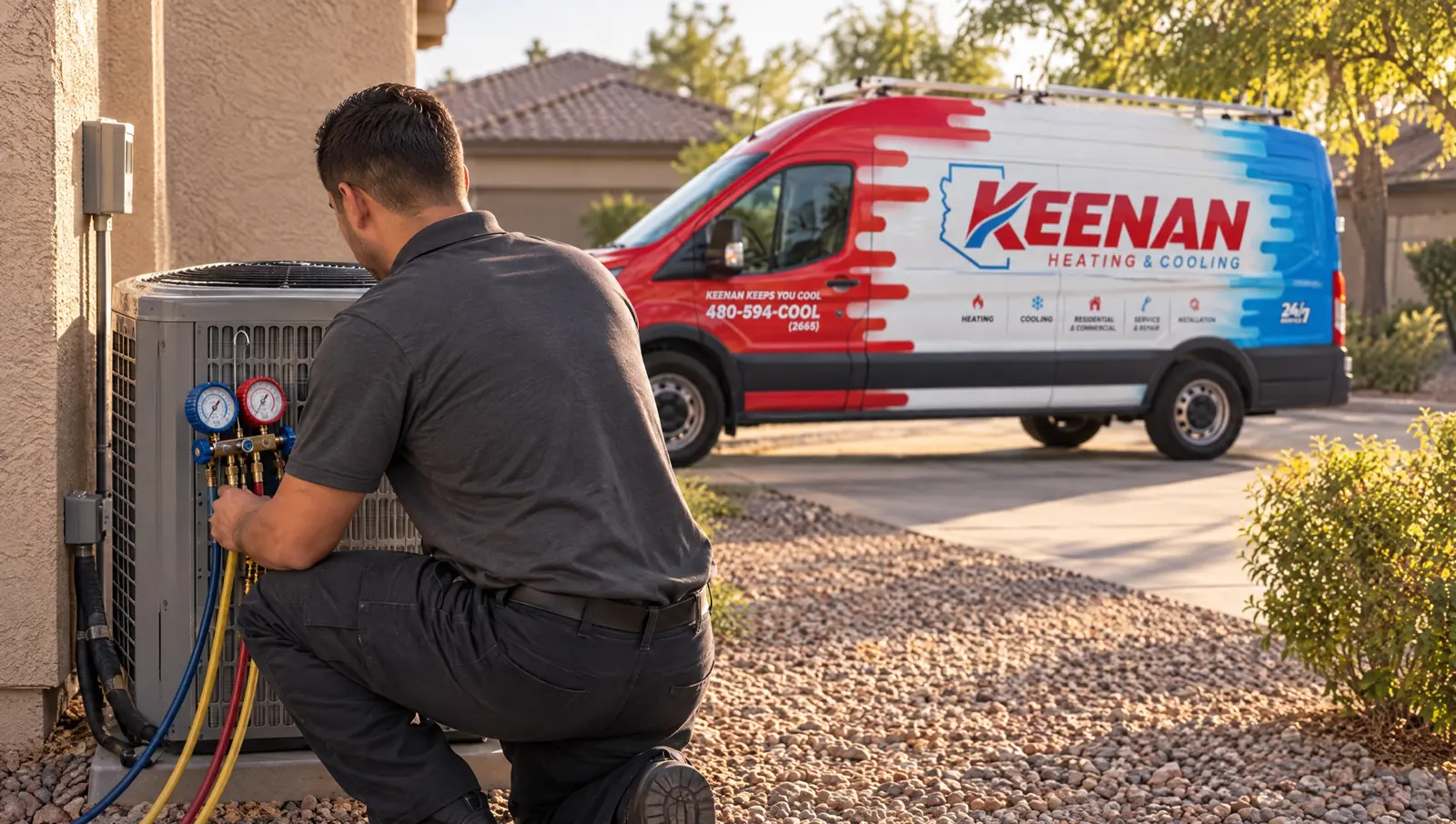
In heating mode, a heat pump runs its cooling cycle in reverse: a part called the reversing valve flips the flow so the system moves heat into your home instead of out.
The reversing valve can stick. Defrost controls, which clear frost off the outdoor coil, can fail. A refrigerant leak or a failed outdoor fan motor cuts heating output. Sometimes the thermostat is just in the wrong mode.
When the heat pump falls short, backup heat strips pick up the slack, but they use more electricity than the heat pump. Constant “aux heat” is worth a call.
Thinking about a new system? See heat pump installation.
Gas furnace vs. heat pump: common heating problems
Know your system.
Gas furnace
- How it makes heatBurns natural gas.
- Common failure partsIgniter, flame sensor, pressure switch, inducer motor.
- “Blowing cool air” usually meansThe burners didn’t light or shut off early.
- Safety concernsGas leaks and carbon monoxide.
Heat pump
- How it makes heatMoves heat from outdoor air.
- Common failure partsReversing valve, defrost controls, outdoor fan motor.
- “Blowing cool air” usually meansPossibly normal, or low output or a stuck valve.
- Safety concernsElectrical, especially heat strips.
AC trouble instead? See AC repair.
How heating repair with Keenan works
Start with a conversation.
Tell us what the heater is doing
Share your system type if you know it, what changed and when. No need to diagnose it yourself.
We diagnose and explain
Your technician finds where the heating sequence stops and tells you, in plain language, whether a repair makes sense.
You approve the price, we repair and test
Review the proposed work and price before approving the repair. Afterward, we run a full heating cycle to confirm it works.
Chilly house? Let’s find out why.
What affects heating repair cost
No surprises.
Every repair is priced on what your system needs.
- System typeGas furnace, electric furnace or heat pump.
- The part that failedA flame sensor and a heat exchanger are very different jobs.
- Age and warrantySome parts may still be covered by the manufacturer’s warranty.
- AccessAttic, closet or garage.
- Refrigerant workFor heat pumps with a leak.
- More than one problemA furnace that overheated, for example, may have worn other parts along the way.
Keenan reviews the price with you before any work begins.
The person behind the name
Your neighbor.
Your comfort.
Daniel grew up in the East Valley and still calls it home. Keenan is locally owned, family owned, and independent. Not owned by private equity.
Explore more
Care for your whole home.
Heating repair questions
A little clarity.
Why is my furnace blowing cold air?
First, check that the thermostat is set to Heat and the fan to Auto. If it is, common causes include a dirty flame sensor, a failed igniter, or a limit switch tripped by a clogged filter. A technician can find which.
Why does my heat pump air feel only warm?
Heat pump air comes out cooler than furnace air, so it can feel lukewarm while the house still warms properly. If the house isn’t reaching the set temperature, or aux heat runs constantly, call.
Why does my heater smell when I first turn it on?
Dust settles on heating parts over summer and burns off the first time the heat runs. A faint smell for a few minutes is normal. A lingering or electrical smell isn’t. If it smells like gas, follow the safety steps above.
Is it worth fixing a furnace I barely use?
It depends on the repair and the furnace’s age, and safety comes first. A small fix on a sound furnace usually makes sense. A cracked heat exchanger on an older unit may not. Replacing? See heat pump installation.
What does emergency heat mean on my thermostat?
Emergency heat runs a heat pump’s backup heat strips without the heat pump. It’s meant for when the heat pump isn’t working. If your system runs on emergency or aux heat all the time, call.
Can I discuss ongoing maintenance?
Yes. Explore the Keenan Comfort Club and ask about the terms for your equipment. Our fall maintenance checklist covers getting the heat ready.
Around the East Valley